
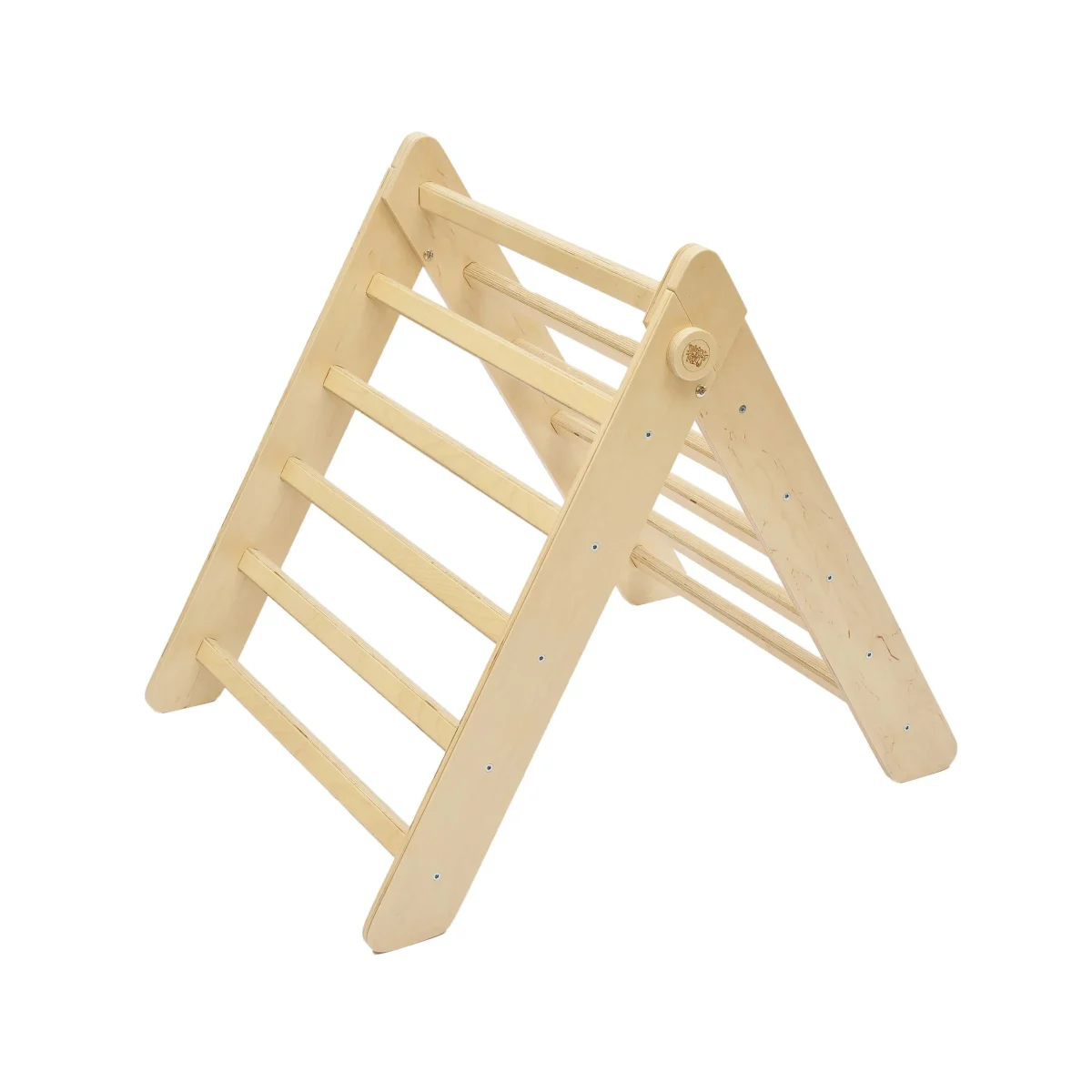
A Pikler triangle is a wooden A-frame climber with rungs on which a child pulls up, stands and climbs. The makers state different ages: leg&go from 6 months to 5 years, BusyKids from 1 year and Family-SCL ages 2–7. You choose by age, height and load; below is a comparison of the models in our shop and five triangles in stock.
What it is and what it is for
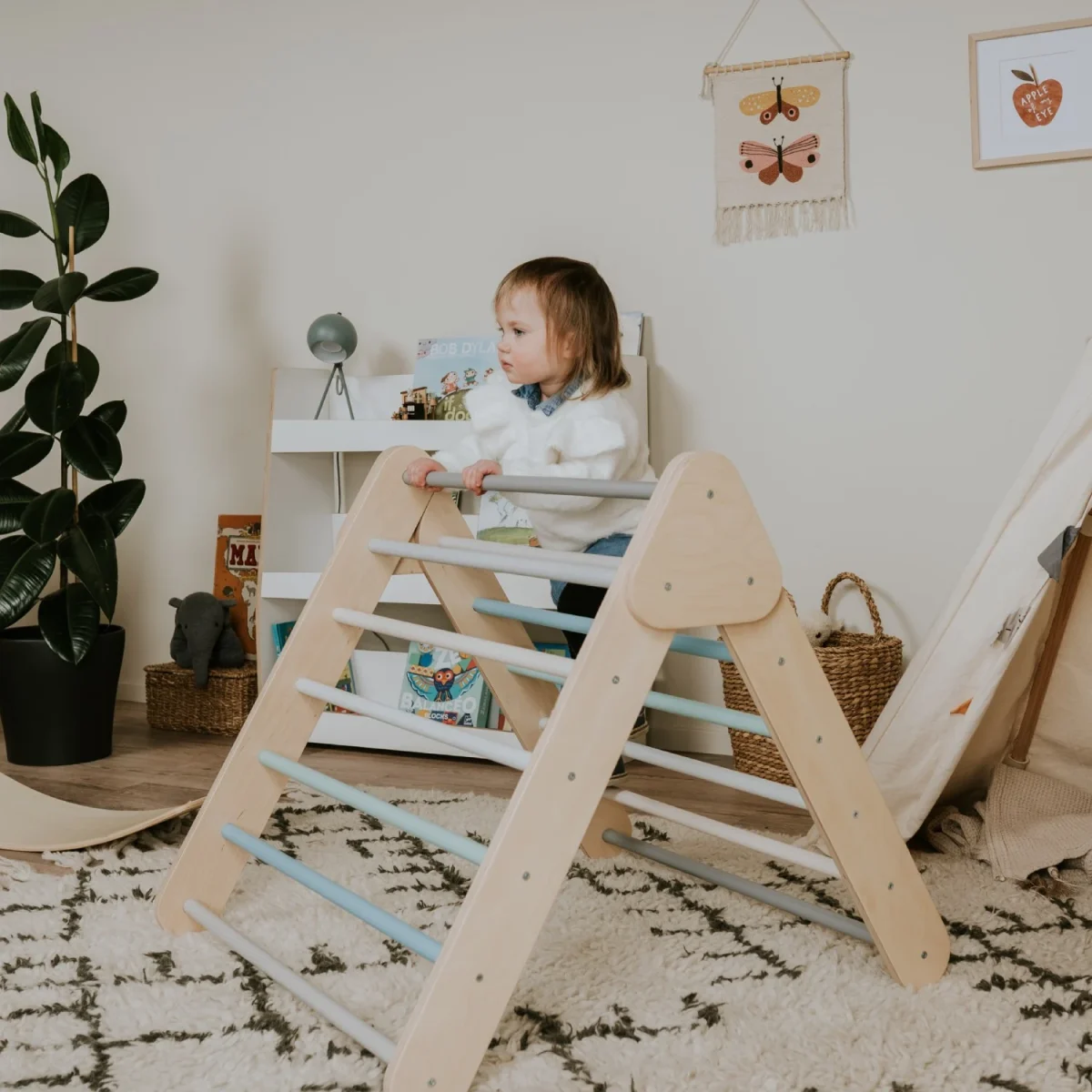
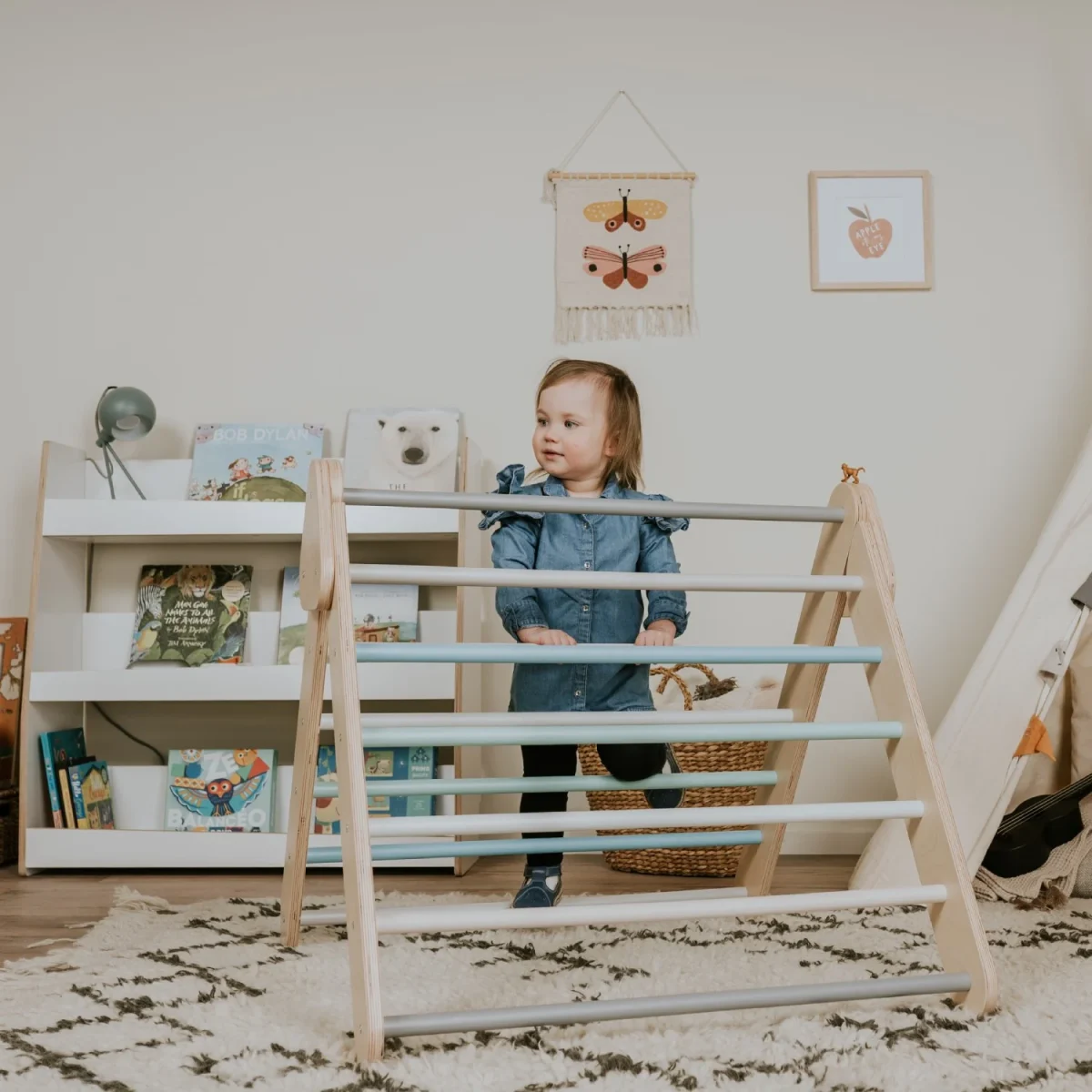
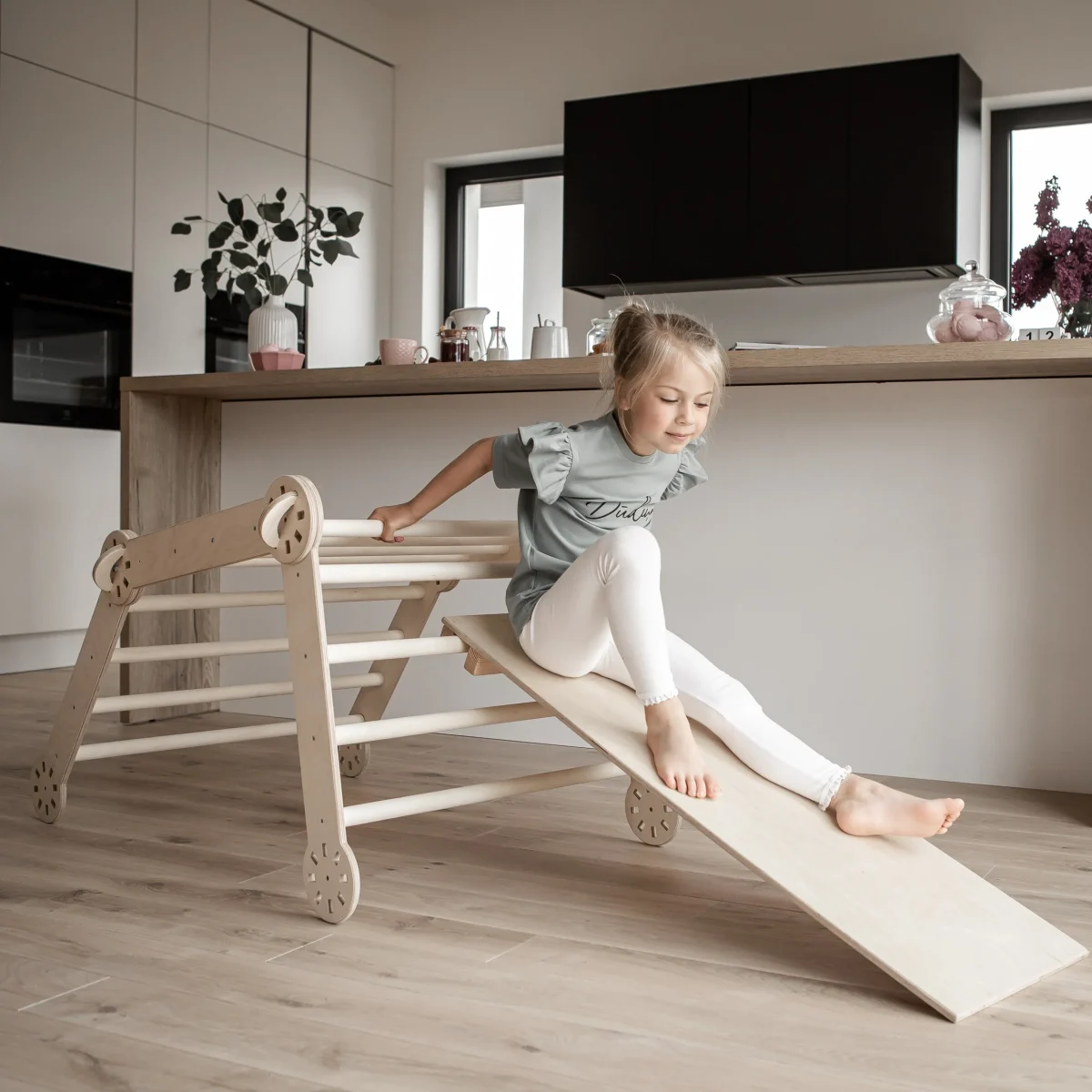
The name comes from the approach of Emmi Pikler: the child moves on their own, at their own pace. A climbing frame is made for that. A baby pulls up and stands at the rungs (the leg&go wooden triangle page says “from around six months”), then learns to climb up and down, and later climbs, passes under the frame and hides inside. Add a ramp or slide and the same triangle becomes a small obstacle course. Different makers design the same kind of triangle for different ages, so compare the numbers on the product pages rather than the names.
What to look for
- The maker’s age. leg&go from 6 months to 5 years, the leg&go triangle with a Swedish wall from 6 months to 7 years, BusyKids from 1 year, Family-SCL ages 2–7, and the MeowBaby ladder with a slide and climbing wall from age 3.
- Size. The leg&go triangle is 72 cm high, 86 cm long and 82 cm wide. The Montessori House Bed 2-in-1 has two positions: 67 and 51 cm high. The Family-SCL triangle with two sections measures 80 × 100 cm, with three sections 80 × 150 cm.
- Load. BusyKids 80 kg, Montessori House Bed 90 kg for the folding one and 50 kg for the 2-in-1, Family-SCL 100 kg, the MeowBaby ladder 40 kg. Compare it with your child’s weight and with whether older children will climb too.
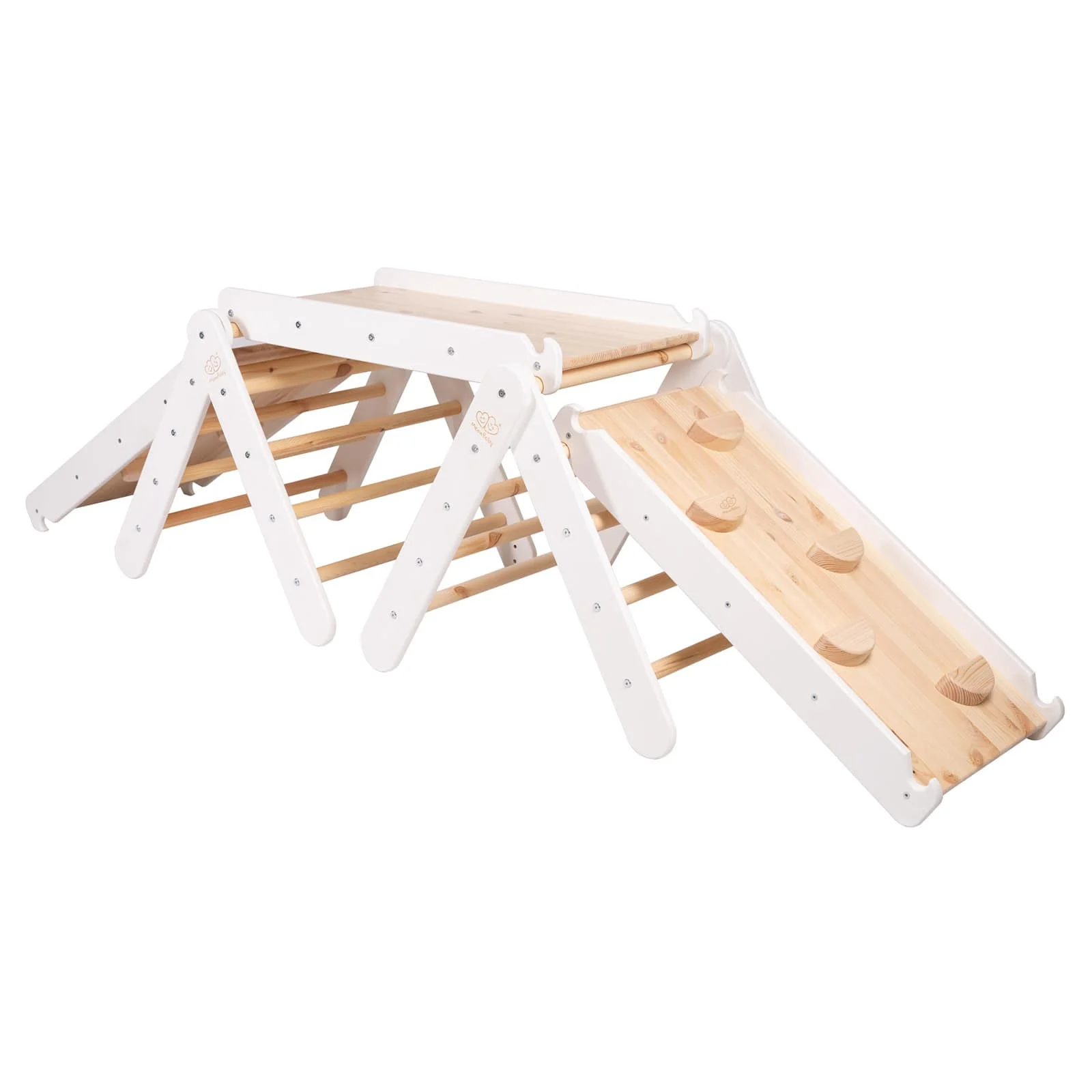
- A slide or ramp. The ramp is a two-sided board: smooth on one side for sliding down, with rungs on the other for climbing up. It is in the set with the BusyKids and the folding Montessori House Bed, while the leg&go ramp is sold separately.
- Folding. The folding Montessori House Bed triangles store flat — handy when space is tight. On the BusyKids the frame lock keeps it from folding during play.
- Material and assembly. Birch plywood is stated for the leg&go triangle with a Swedish wall, Family-SCL, BusyKids (the sides) and Montessori House Bed. The BusyKids arrives unassembled with instructions and fittings.
- Made to order. Some Family-SCL triangles are made to order; the time in weeks is on the product page.
Comparison of models
| Model | Age stated by the maker | Size | Load | Notes |
|---|---|---|---|---|
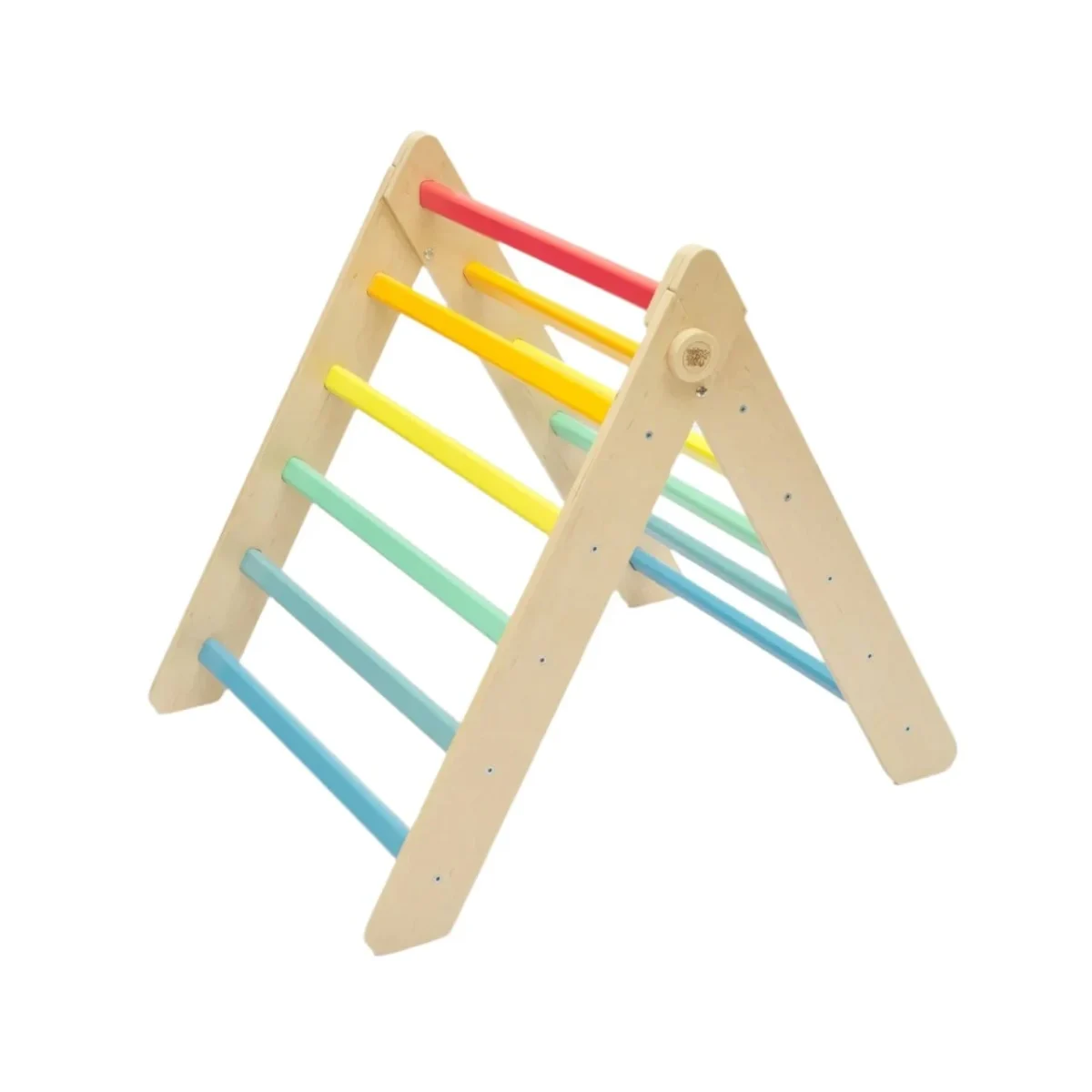
| leg&go wooden | 6 months – 5 years | 72 × 86 × 82 cm | not stated | three versions: pastel, rainbow, natural |
| BusyKids with frame lock | from 1 year | — | 80 kg | the lock keeps the frame from folding, five finishes |
| BusyKids with slide | from 1 year | — | 80 kg | two-sided slide and climbing board in the set |
| Montessori House Bed folding | — | — | 90 kg | folds flat, ramp in the set |
| Montessori House Bed 2-in-1 | — | 67 or 51 cm high, 71.7 cm wide | 50 kg | two slopes, weighs 9.4 kg |
| Family-SCL, two sections | 2–7 years | 80 × 100 × 8 cm | 100 kg | birch plywood, weighs about 6 kg |
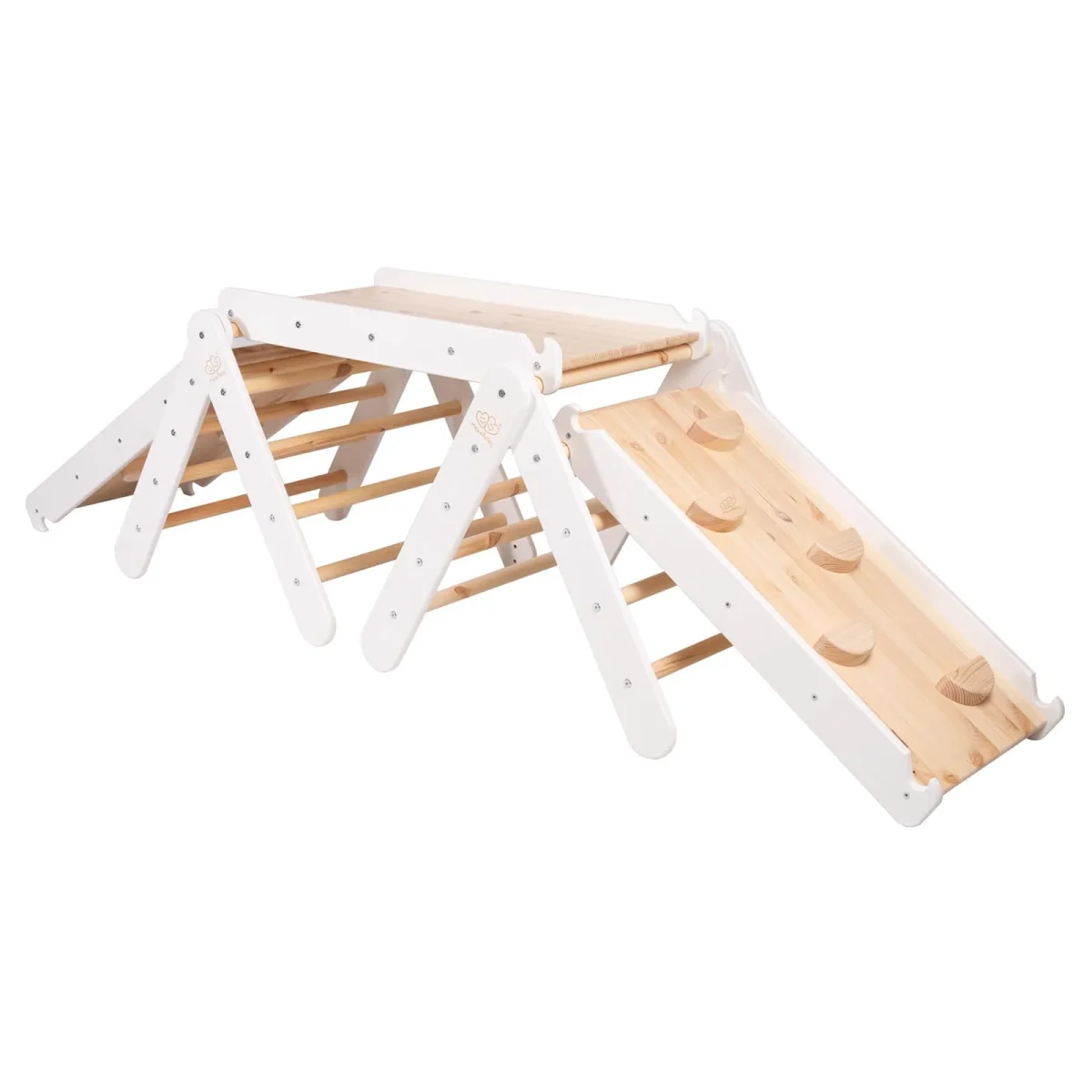
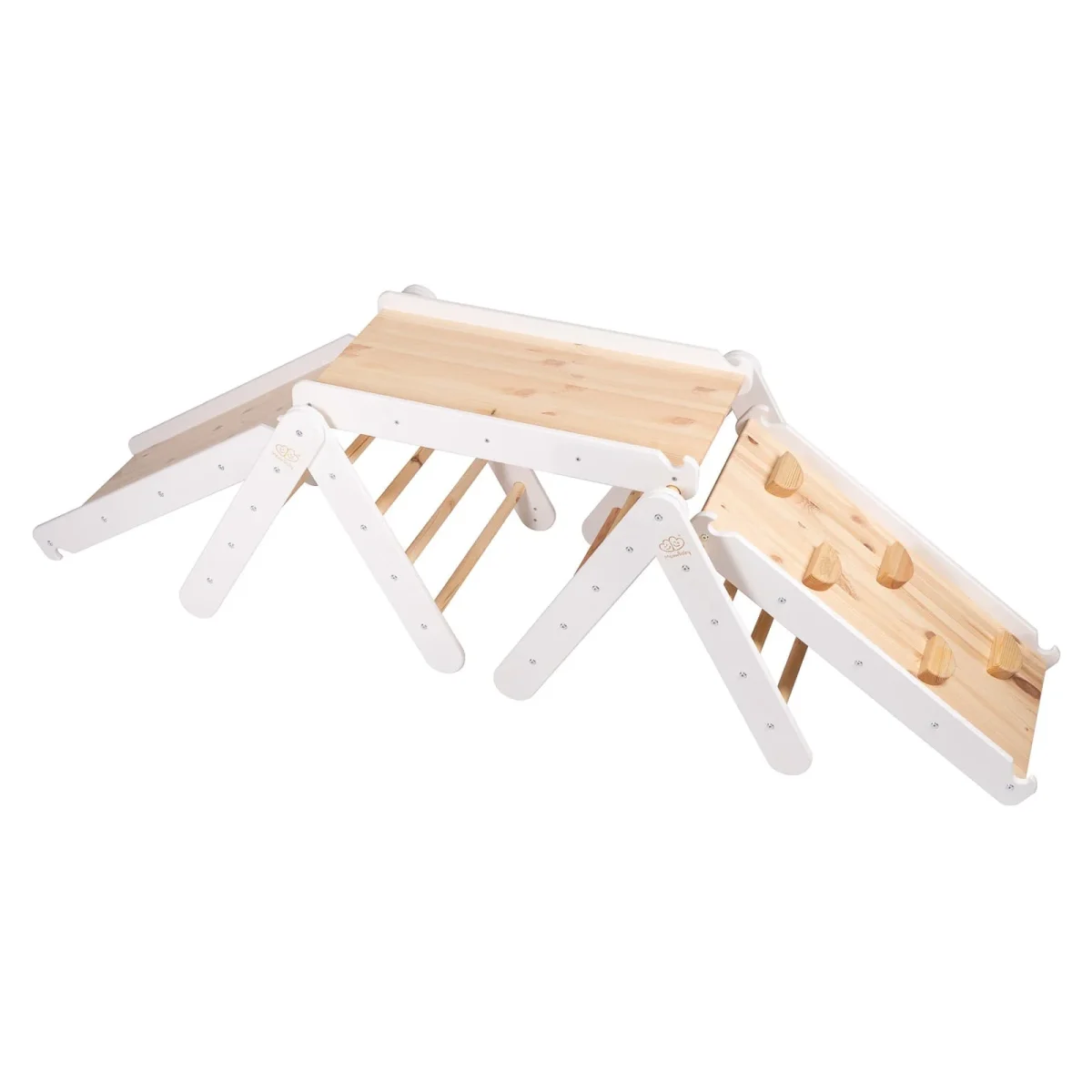
| MeowBaby set | — | — | — | triangle, slide and climbing frame, parts combine |
A dash means the maker does not state it on the product page.
Ladders, arches and add-ons
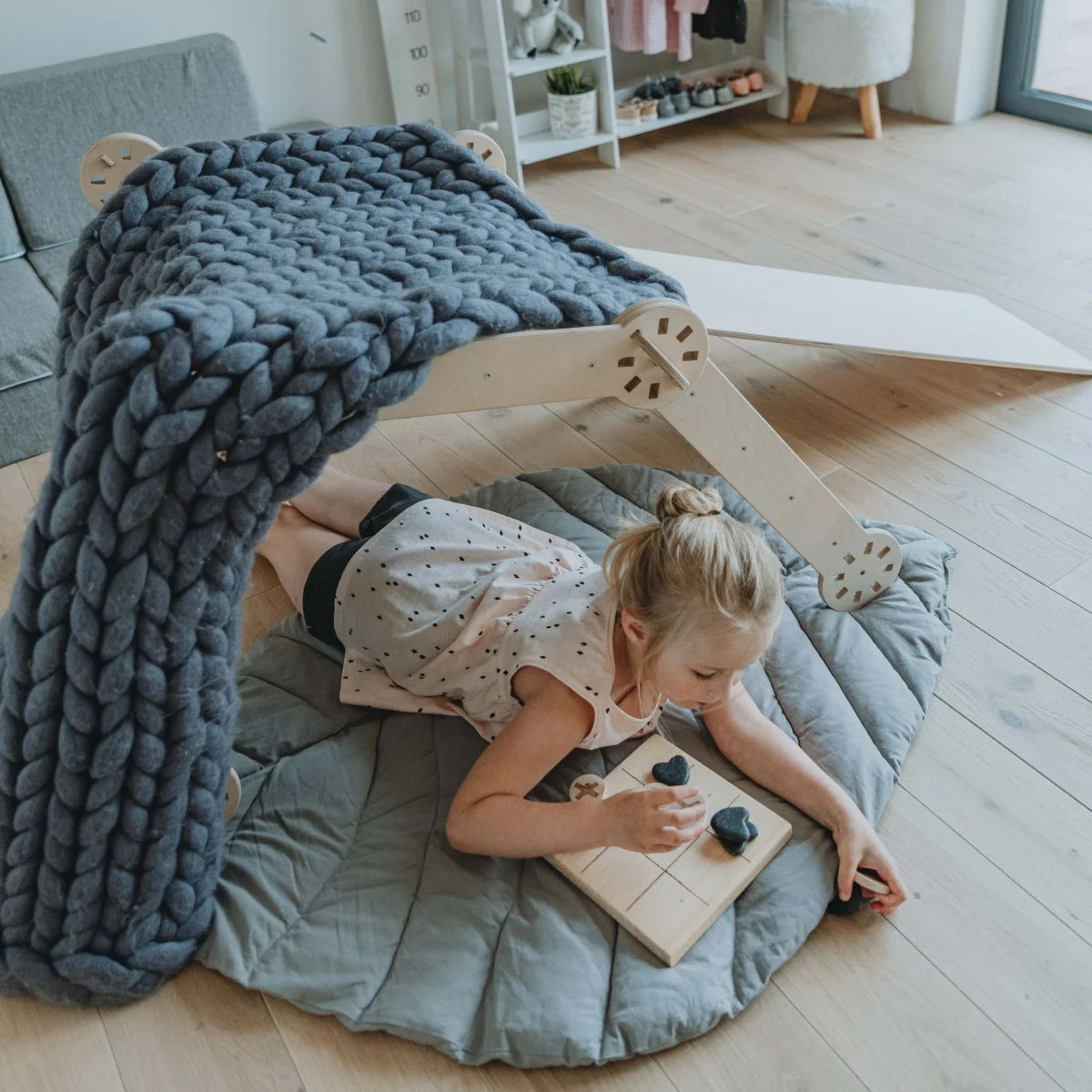
Besides classic triangles there are ladders and arches. The MeowBaby ladder with a slide and climbing wall has 11 rungs, measures 59.8 × 61 cm, takes 40 kg and is made for children aged 3 and up; it takes apart, so it can go out into the garden. The large MeowBaby ladder also has 11 rungs, is for ages 4+ and a load of up to 30 kg: drape a blanket over it and it becomes a hideaway. The Montessori House Bed arch rocker flips over into a balance board. Add-ons are sold for the triangles: a tent cover for the BusyKids triangle and a ramp for the leg&go triangle.
In stock now
leg&go
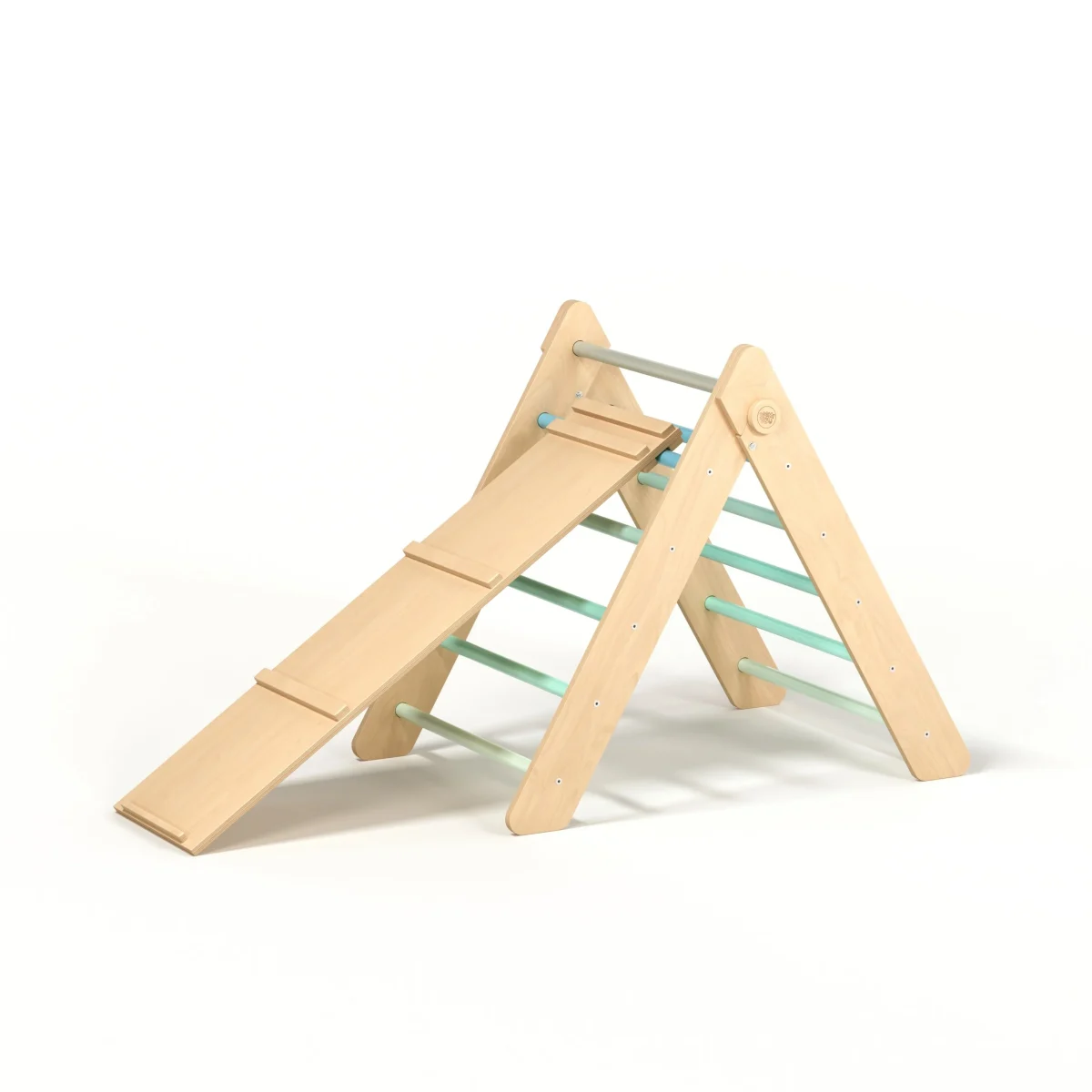
Wooden Pikler Triangle for Babies from 6 Months
149 €
BusyKids
Pikler Triangle with Frame Lock
96 €
Montessori House Bed
Folding Triangle with Ramp, up to 90 kg
200 €
MeowBaby
Climbing Triangle Set with Slide and Climbing Frame
460 €
BusyKids
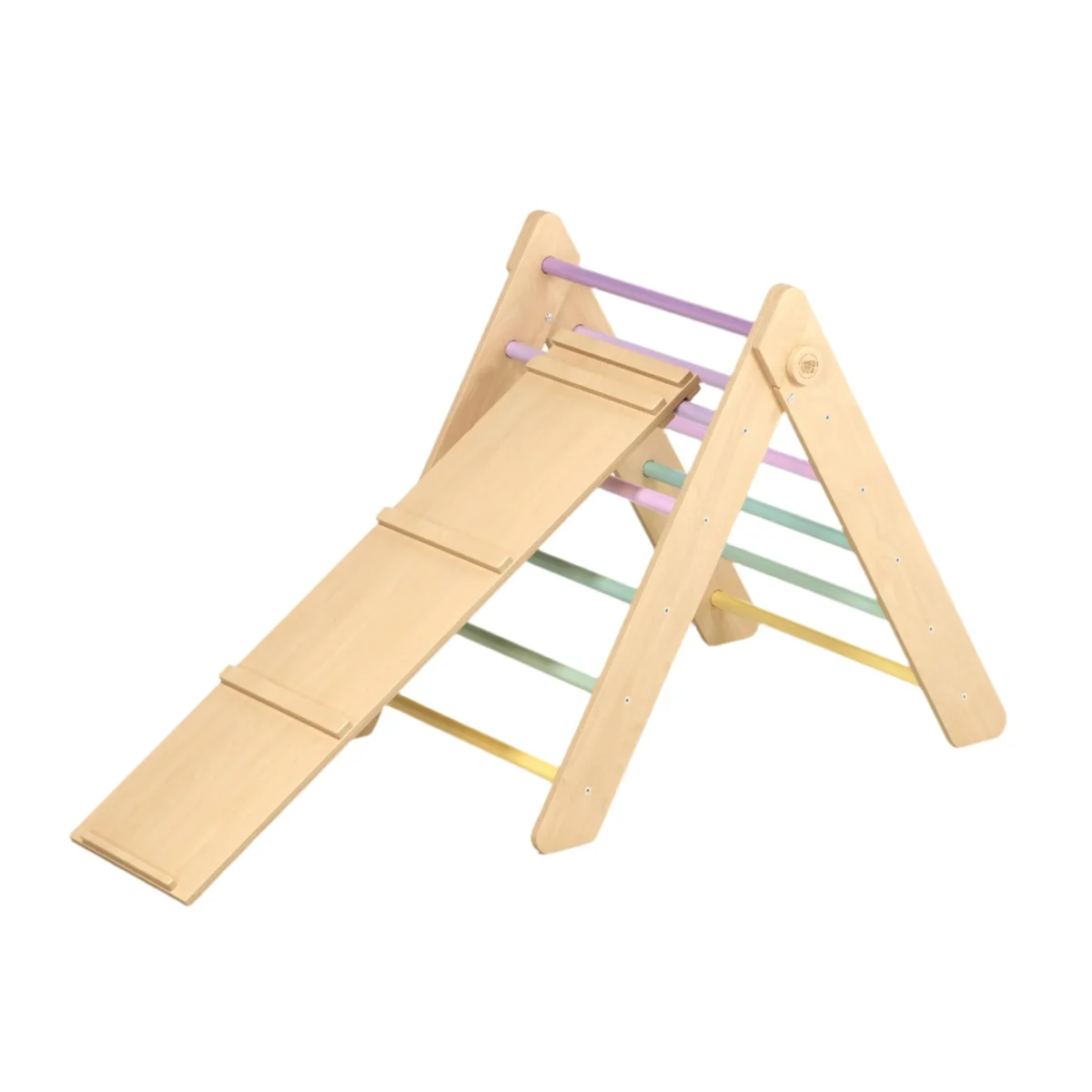
Pikler Triangle with Slide and Climbing Ramp
140 €
How to choose in a minute
- A first support for a baby from six months: the leg&go wooden triangle.
- A child from one year, wanting something sturdy with a slide: BusyKids.
- Little space: the folding Montessori House Bed, which stores flat.
- Older children will climb too: the three-section Family-SCL (up to 100 kg), which can also be mounted on the wall as a Swedish ladder.
- You like to combine parts: the MeowBaby set with a slide and a climbing frame.
All triangles and climbers are on the shelf Pikler triangles & climbers; by age, see 6–12 months and 1–2 years. Gifts by age are in the guides for a 1-year-old and for a 2-year-old. All guides are in the Guides section.
Safety
While the child is small, stay close. Set the triangle on a level floor, read the maker’s instructions before use and check that the fittings are tight. Do not exceed the load stated on the product page.
Frequently asked questions
From what age should I set up a Pikler triangle?
According to the leg&go page, from 6 months: a baby pulls up to stand at the rungs. BusyKids is made for ages 1 and up, Family-SCL for ages 2–7. Each maker states its own age, so check the page of the exact model.
Do I need a slide?
Not necessarily. A slide makes the triangle more varied: you slide down it, and flipped over it becomes a climbing board. It is in the set with the BusyKids and the folding Montessori House Bed, and for the leg&go triangle it can be bought separately.
What load does a Pikler triangle take?
It is stated on each page: BusyKids 80 kg, the folding Montessori House Bed 90 kg, Family-SCL 100 kg, the MeowBaby ladder 40 kg. Choose a model with a margin over your child’s weight, and remember that older children will climb on it too.
Why choose a folding triangle over a solid one?
A folding one stores flat, so it suits a small room. A solid one stays in place and usually needs no setting up before each game. What suits you depends on the space in your home.
Sources
Sizes, loads, ages and materials are taken from the product pages (leg&go, BusyKids, Montessori House Bed, Family-SCL, MeowBaby) — these are the makers’ data and instructions. For the approach of Emmi Pikler, see the website of the Pikler Institute in Budapest.