
If you have just moved to Estonia, or you are raising a child here, you will meet the päkapikud in early December: kindergarten buzzes about them and there are suddenly slippers on the windowsill. It is one of the warmest local customs and easy to join. Here is how it works, plus 24 ideas for what to leave without spending more than €10 at a time.
Who the päkapikud are
A päkapikk is a small helper that Estonians link with December and Christmas. It is often described as an assistant to Jõuluvana, the Estonian Father Christmas, and in popular accounts of the tradition the elves also had a second job: watching the children in the weeks before Christmas. Today it is more a kind ritual than an inspection. The päkapikud come at night and leave small treats for those who waited.
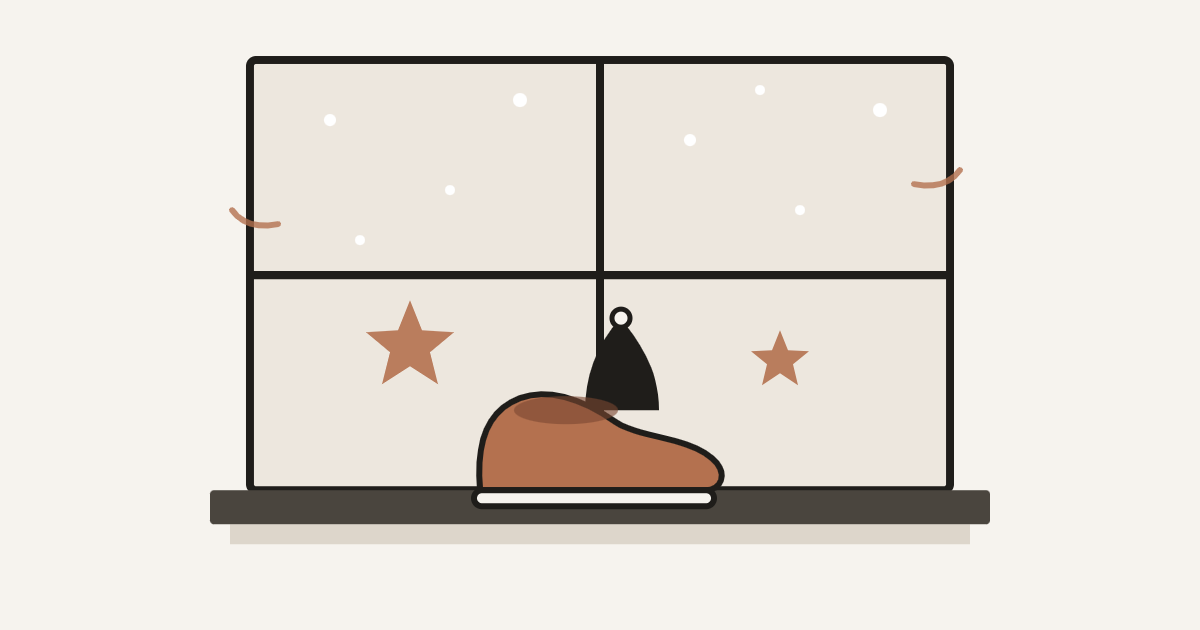
Children traditionally put a slipper, shoe, sock or small box on the windowsill or by the door. In the morning they check whether anything has appeared inside, usually a sweet, a piece of fruit or a trinket. By custom the main presents are brought by Jõuluvana on the night of 24 December.
When it starts
There is no single rule. Sources name different dates: some families begin on 1 December, others on the first Sunday of Advent, and the visits end on Christmas Eve. In your family you choose; it helps to match your child’s kindergarten or school so the morning finds do not differ from classmates’. You do not need to leave something every day: many families do “little and often”, for instance three or four times a week and one bigger gift close to Christmas.
How not to overdo it
The size of the slipper is a natural limit: if the treat does not fit, it is bigger than it needs to be. For toddlers, think about safety: nothing small enough to swallow and no hard sweets before two or three years old. If your child has an allergy, swap sweets for something inedible. A note “from the päkapikk” with a short line or a drawing works better than any present.
24 ideas under €10
Shop prices vary, so use the rule “everything together stays under ten euros”. For under-twos, always check the age on the packaging.
Ages 0–2: a soft mini toy; a board book; a teether; non-slip socks; a wooden rattle; a bright scarf for peekaboo; a wooden animal charm for the cot; patterned paper napkins for a teddy tea party.
Ages 3–5: a set of wax crayons; stickers; modelling clay in a tub; a 24-piece mini puzzle; a spinning top; a character toothbrush; hair clips or bands; a clementine and a chocolate coin.
Ages 6+: a notebook and a colour pen; a friendship-bracelet kit; a pocket torch; coloured pencils in a tin; an eraser figure; riddles or a comic; temporary tattoos; a small maze puzzle.
Where to find small things
For a month that needs plenty of small items we have Gifts & keepsakes; the guide What to give a 2-year-old and its age-based neighbours in the guides section help you choose by age. For the early years, see First toys. And for where to go during the Christmas holidays, check our calendar of children’s events in Tallinn (in Estonian and Russian).
Frequently asked questions
Do we have to join in if we are not Estonian?
No, but children at kindergarten and school usually talk about the päkapikud, and the ritual helps a child feel part of the group. Start small: a slipper on the windowsill and one find every few days.
What if my child asks whether the päkapikud are real?
It depends on age and family. Many parents answer with a question, “What do you think?”, and keep the game going until the child decides they are ready for a different version.
Can I leave something that is not sweet?
Yes, and it is a good idea: a small toy, a sticker or a note. That way you do not depend on sweets or worry about allergies.